After Forty, I Began to Think About Life Through Death
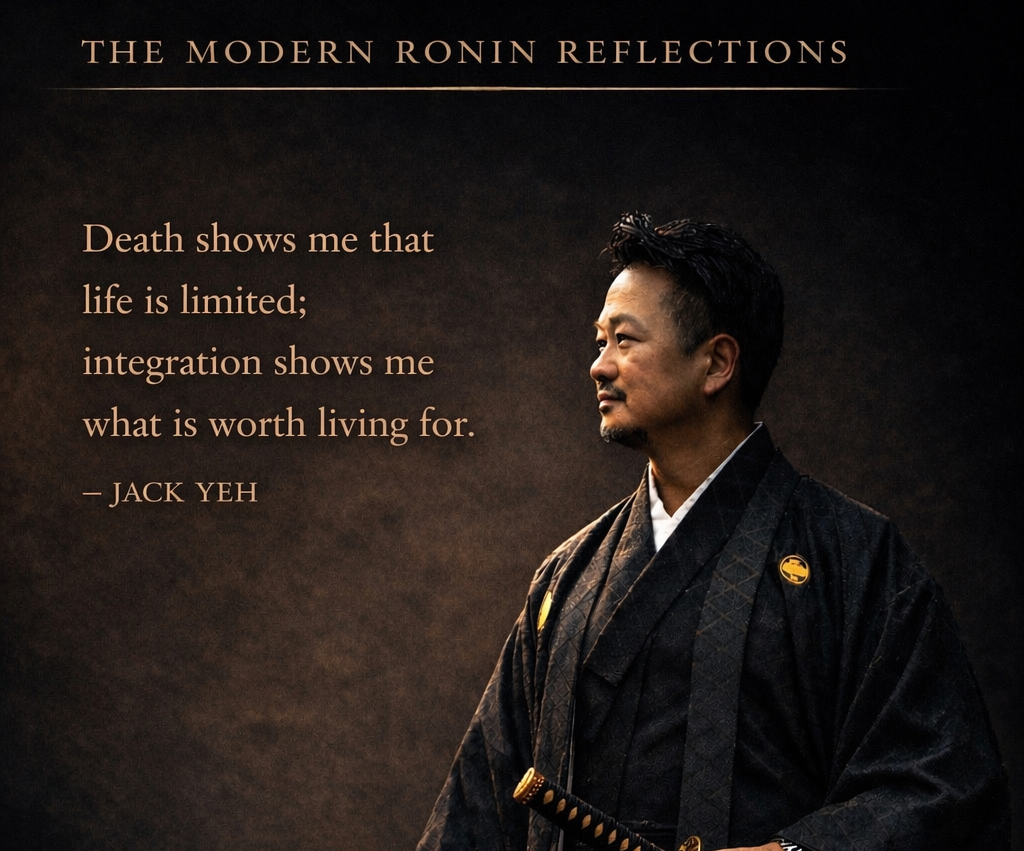
After forty, I gradually went through a deep process of self-integration.
If I borrow Carl Jung’s language, it was something like shadow integration.
After going through that path, I found that death began to enter my thinking naturally.
It was not negativity, and it was not pessimism.
It felt more like an honest premise:
life is limited, time is limited, and attention is limited.
Once that truth really enters you,
the way you do many things begins to change.
You value your time more.
You value your energy more.
And you begin to ask yourself more often:
Is this really worth doing?
Is this truly something I want from the heart?
And when a person becomes more aligned with himself,
lives less for the expectations of others,
and betrays his inner self less and less,
his fear of death often begins to fade.
Because what leaves the deepest regret is often not death itself,
but never having truly lived.
四十歲之後,我開始用死亡思考生命
四十歲之後,我慢慢走過了一段很深的自我整合。
如果借用卡爾・榮格的說法,那像是一種陰影整合。
走過那段路之後,我發現死亡這件事,開始自然地進入我的思考裡。
它不是一種消極,也不是一種悲觀。
它更像是一個很誠實的前提:
生命有限,時間有限,注意力有限。
當這件事真正進入你的內在之後,
你做很多事情的方式都會改變。
你會更珍惜時間,
你會更珍惜精力,
你也會更常問自己:
這件事到底值不值得我去做?
這是不是我發自內心真正想做的事?
而當一個人越來越與自己對齊,
越來越少為別人而活,
越來越少背離自己的內心,
他對死亡的恐懼,反而會慢慢下降。
因為真正讓人遺憾的,往往不是死亡本身,
而是從來沒有真正活過。