Are Children Born in Moral Debt?

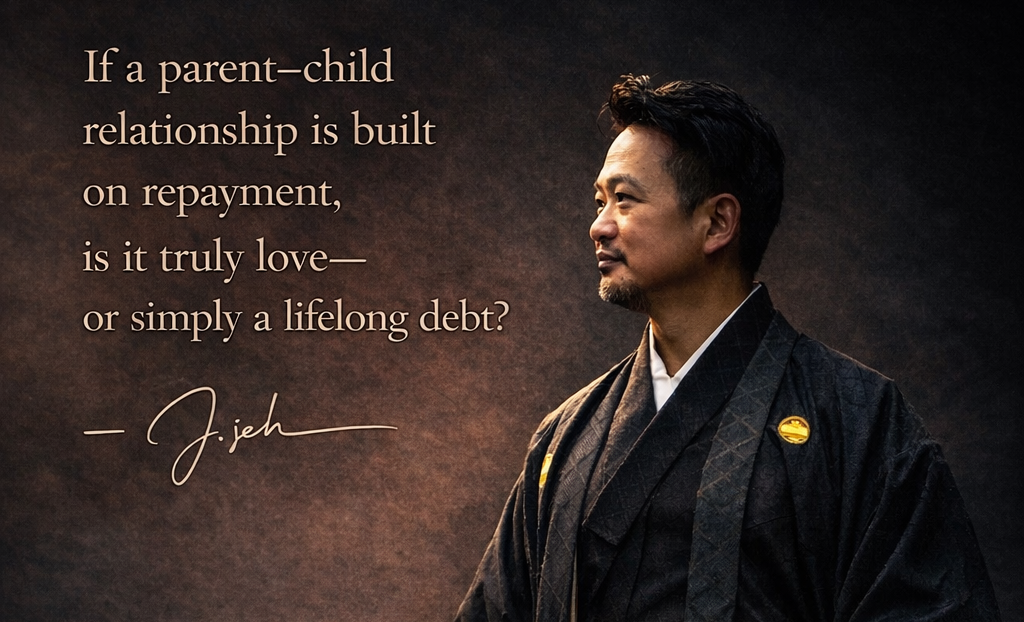
In many cultures influenced by Confucian traditions, filial piety is treated as a fundamental virtue. Children are constantly reminded of the sacrifices their parents made and are expected to repay that “debt.”
But this raises a deeper question.
Before parents bring a child into this world, the child was never asked whether they wished to be born. If the decision to have a child belongs entirely to the parents, why should the child be born already carrying a moral obligation that must be repaid?
If a child grows up believing that their very existence is meant to repay their parents’ sacrifices, what kind of psychological burden does this create?
Would such a framework allow a child to develop a healthy sense of self and an independent identity?
Or would it instead produce a life shaped by guilt, obligation, and the constant feeling of being indebted?
Perhaps we should ask a more fundamental question:
Should the relationship between parents and children be built upon repayment?
If a parent–child relationship is built upon the expectation of repayment, can it truly be considered a healthy relationship?
And if love itself is conditioned upon repayment, can it still be called love?
在许多受到儒家传统影响的文化中,孝道被视为一种根本性的美德。孩子从小不断被提醒父母为他们所做的牺牲,并被期待去偿还这份“恩情”。
但这也引出了一个更深层的问题。
在父母把一个孩子带到这个世界之前,这个孩子从未被询问过自己是否愿意出生。如果决定生下孩子的是父母,那么为什么这个孩子一出生就要背负一份必须偿还的道德义务?
如果一个孩子在成长过程中被灌输这样一种观念:自己的存在是为了偿还父母的牺牲,那么这种观念会给孩子带来怎样的心理负担?
在这样的框架之下,一个孩子真的能够发展出健全的自我意识和独立的人格吗?
还是说,这样的成长过程更容易塑造出一种被 guilt(内疚)、obligation(义务)与 perpetual debt(永远无法偿还的债务感)所支配的人生?
或許我們應該問一個更根本的問題:
親子關係是否應該建立在「償還」之上?
如果一段親子關係是建立在償還的期待之上,那它還能被稱為一種健康的親子關係嗎?
而如果愛本身是以償還為前提,那樣的愛,還能稱之為愛