Attention and Information Density

We often say that time is scarce.
But in the modern world, something may be even more scarce than time:
attention.
We live in an age flooded with information.
News, social media, endless content —
and with it, endless noise.
The real problem today is not the lack of information.
It is the signal hidden inside the noise.
In such an environment, attention becomes the most valuable resource.
People simply do not have the time — or the attention —
to sift through thousands of pages of narrative
in order to extract a few useful insights.
Many traditional books have very low information density.
They contain a great deal of story, context, and detail,
but very little directly usable signal.
To extract the insight, the reader must read the book many times.
Most people never do.
In the age of scarce attention, this is inefficient.
Instead of forcing readers to extract the signal themselves,
it is often better to present the distilled insight directly.
High information density respects the reader’s attention.
It removes the noise
and delivers the signal.
And in a world overflowing with information,
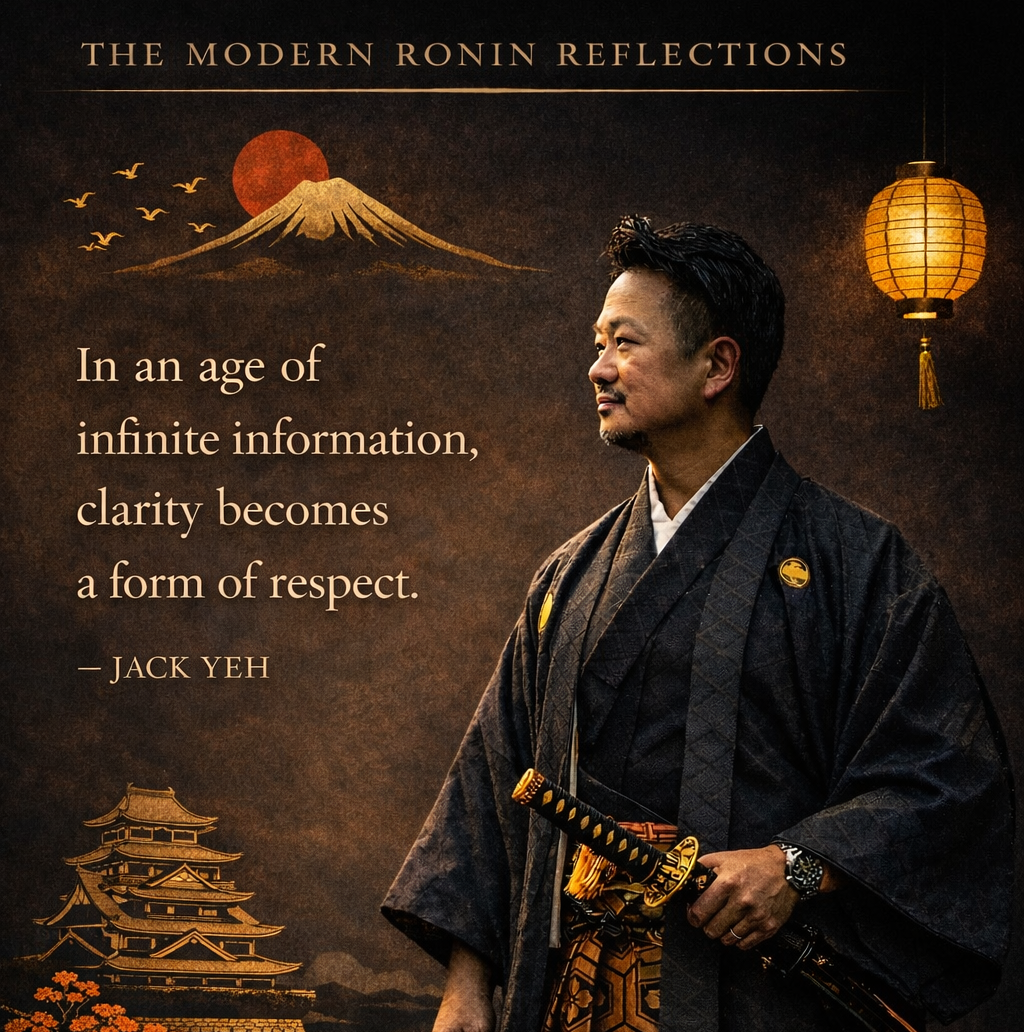
clarity becomes a form of respect.
我們常說:
時間是稀缺的資源。
但在這個時代,有一樣東西可能比時間更稀缺:
注意力。
我們生活在一個資訊爆炸的時代。
新聞、社群媒體、各種內容源源不斷,
同時也帶來大量的雜訊。
今天真正的問題不是資訊太少,
而是訊號被淹沒在雜訊之中。
在這樣的環境下,
注意力成為最珍貴的資源。
人們其實沒有那麼多時間,
也沒有那麼多注意力,
去閱讀大量敘事與細節,
只為了從中提煉出少數有用的洞見。
很多傳統書籍其實具有很低的資訊密度。
它們包含大量故事與背景,
但真正可直接使用的訊號卻很少。
如果讀者想要提煉出那些原則,
往往需要把書讀很多遍。
但大多數人並不會這麼做。
在注意力稀缺的時代,
這是一種低效率的方式。
與其讓讀者自己去提煉訊號,
不如直接呈現被提煉過的洞見。
高資訊密度其實是在尊重讀者的注意力。
它去除雜訊,
只保留下真正的訊號。
在一個資訊過剩的時代,
清晰本身就是一種尊重。