Can Democracy Grow from Hierarchy?
I often find myself reflecting on a question.
In a cultural framework shaped largely by Confucian ethics, social relationships are traditionally organized around hierarchy and obedience. Among the Five Relationships, only friendship approaches equality; the others are structured as superior-to-subordinate relations.
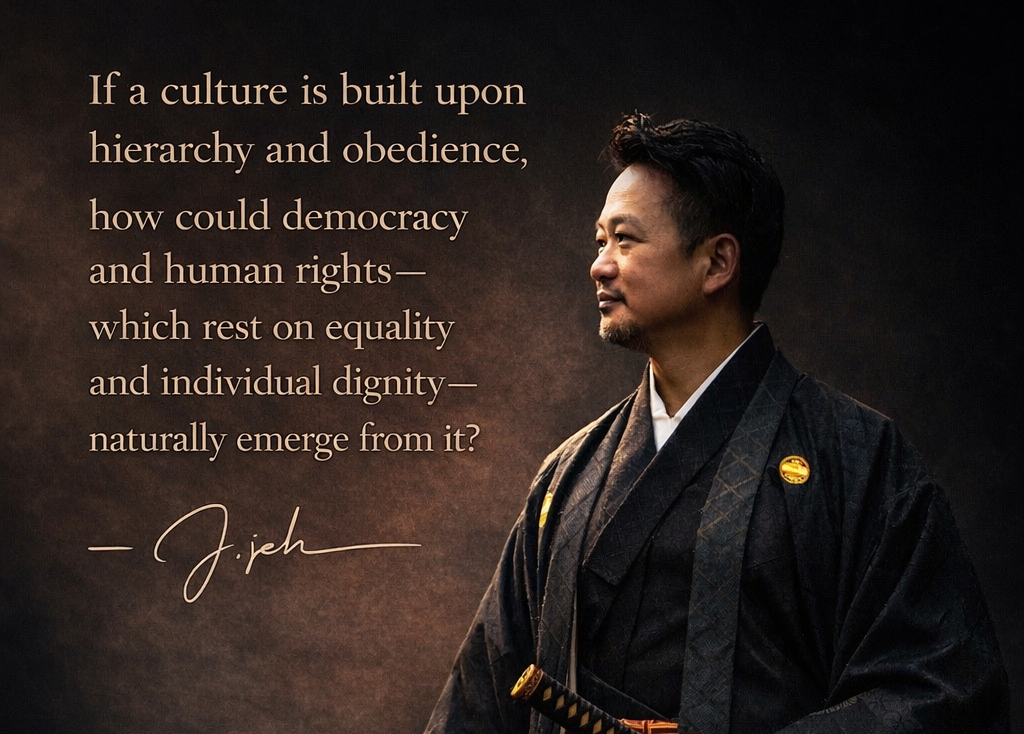
If the underlying structure of a culture is hierarchy and obedience, how could values rooted in equality and individual rights naturally emerge from it?
Democracy and human rights are fundamentally built upon relations of equality and mutual respect.
So the question becomes: within a cultural framework defined by hierarchy and obedience, are democracy and human rights logically difficult to sustain—or even inherently in tension with that very framework?
我常常在思考一個問題。
在以儒家倫理為核心的華人文化裡,社會關係大多建立在階序與服從之上。五倫之中,除了朋友之外,其餘關係幾乎都是上對下的結構。
如果一種文化的基本框架是階級與服從,那麼在這樣的文化土壤裡,又如何可能自然誕生以平等與個人權利為核心的價值?
民主與人權,本質上建立在對等關係與彼此尊重之上。
那麼,在一個強調階序與服從的文化框架裡,民主與人權在邏輯上是否本來就是難以成立,甚至彼此相互抵觸的?