Direction, Not Goals

Life is rarely something that can be planned in advance.
Many people believe that life should be designed through goals and detailed plans.
But in reality, the future cannot be predicted or engineered in that way.
From the perspective of Buddhism, the nature of the world is causality and conditions.
Every moment arises from countless factors interacting with one another.
This system of causes and conditions cannot be fully known beforehand.
You only understand the next step after you take the current one.
In that sense, life is always lived step by step.
This is why I believe we should not obsess over goals.
Goals create a fixed image of the future, and once we set them, we constantly compare our present with that imagined outcome.
That comparison often produces anxiety and frustration.
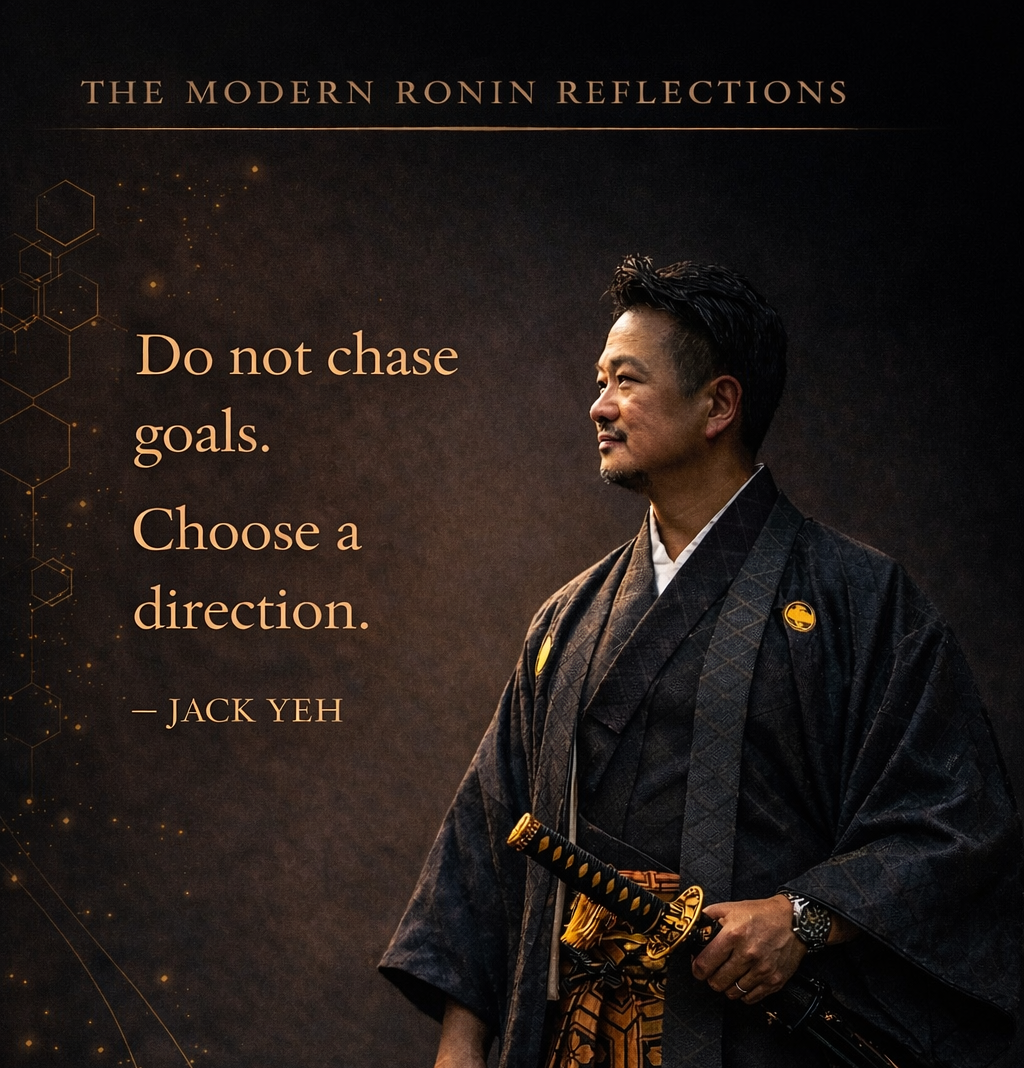
Instead of setting goals, it is wiser to choose a direction.
When the direction is clear, we simply continue walking toward it.
Where exactly we arrive, and when we arrive there, does not need to be predetermined.
This way of living allows life to unfold naturally.
As Steve Jobs once said in his Stanford speech,
you cannot connect the dots looking forward — you can only connect them looking backward.
Only after you arrive somewhere can you look back and understand why each step mattered.
人生其實很少是可以事先規劃出來的。
很多人認為人生應該透過目標與計畫來設計,
但事實上,未來並不是一個可以被預先設計的東西。
從佛教的觀點來看,世界的本質是 因緣。
每一個當下,都是由無數條件交互作用而產生的結果。
這個因緣系統無法被事先複製,也無法被完全預測。
你只有在做出當下的選擇之後,
才會知道下一步應該怎麼走。
某種程度上,人生本來就是 走一步,算一步。
這也是為什麼我認為,人不應該過度執著於設定目標。
目標會創造一個固定的未來想像,
而當你設定目標之後,你就會不斷用那個想像中的狀態去比較現在的自己。
這種比較往往帶來焦慮與痛苦。
與其設定目標,不如確定 方向。
只要方向是清楚的,我們就持續往那個方向前進。
至於何時會抵達哪裡,其實不需要事先預設。
這樣的人生,反而更自在。
就像 賈伯斯在史丹佛大學演講中說的:
你無法預先把未來的點連起來,
只有在回頭看的時候,你才會知道它們是如何連在一起的。
很多事情的意義,
只有走過之後,你才會真正明白。