Freedom Through Inner Independence
In the end, every human being will die.
No matter how much success, fame, or wealth one accumulates, time will eventually take everything away.
In Buddhism, this is known as impermanence.
The Stoics remind us to remember death—
memento mori.
Existential philosophy tells us that each person must ultimately face their own life alone.
Once we truly understand this, we begin to realize that many things people spend their entire lives chasing cannot truly save them.
What truly matters may only be two things:
freedom and independence.
This is also why I teach.
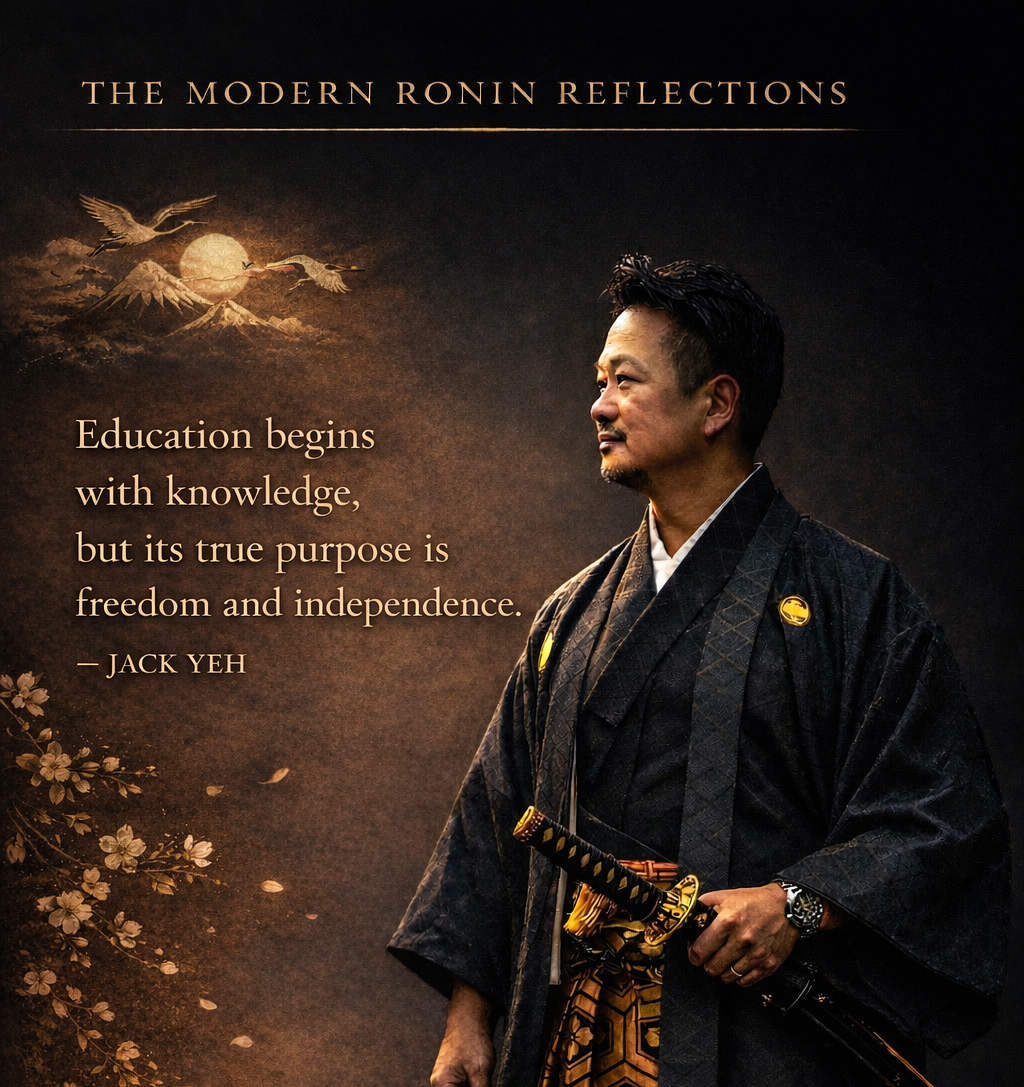
My goal is not merely to transfer knowledge, but to help people gain the tools that allow them to become more independent and free.
When a person develops the ability to think independently and the capacity to stand on their own, they no longer need to depend on others for their existence.
Even if someone has loving family, friends, and partners, one must still learn to stand alone at the deepest level of life.
Because at the deepest level,
every human being is ultimately alone.
And true freedom comes from understanding and accepting this reality.
最終,人都會死去。
無論一個人累積了多少成就、名聲或財富,時間最終都會將一切帶走。
在佛學中,這被稱為「無常」。
斯多噶哲學提醒我們要記住死亡——
memento mori。
存在主義則告訴我們:
每一個人終究要獨自面對自己的生命。
當我們真正理解這件事時,就會明白:
很多人一生追逐的東西,其實都無法真正拯救我們。
真正重要的,也許只有兩件事:
自由與獨立。
這也是我做教育的原因。
我並不是單純想傳授知識,
而是希望透過知識與方法,
讓一個人能夠變得更獨立、更自由。
因為當一個人具備了獨立思考的能力、
具備了自我生存與成長的能力,
他就不再需要依附於任何人。
即使一個人擁有愛他的家人、朋友與伴侶,
人仍然必須在內心深處學會獨立。
因為在生命的最深處,
每一個人終究是孤獨的。
而真正的自由,
正是來自於對這種孤獨的理解與接受。