From Wound to Wholeness: The Path of Integration
After overcoming years of internal struggle shaped by culture and upbringing,
I began to look back at the pain that once defined me.
And I realized—
it was never just pain.
It was energy.
Most people see the suffering of growth as misfortune, even a curse.
But there is another side to it—
it can become a powerful force for transformation.
As Carl Jung suggested,
the purpose of life is not to avoid suffering,
but to become whole through the integration of the self.
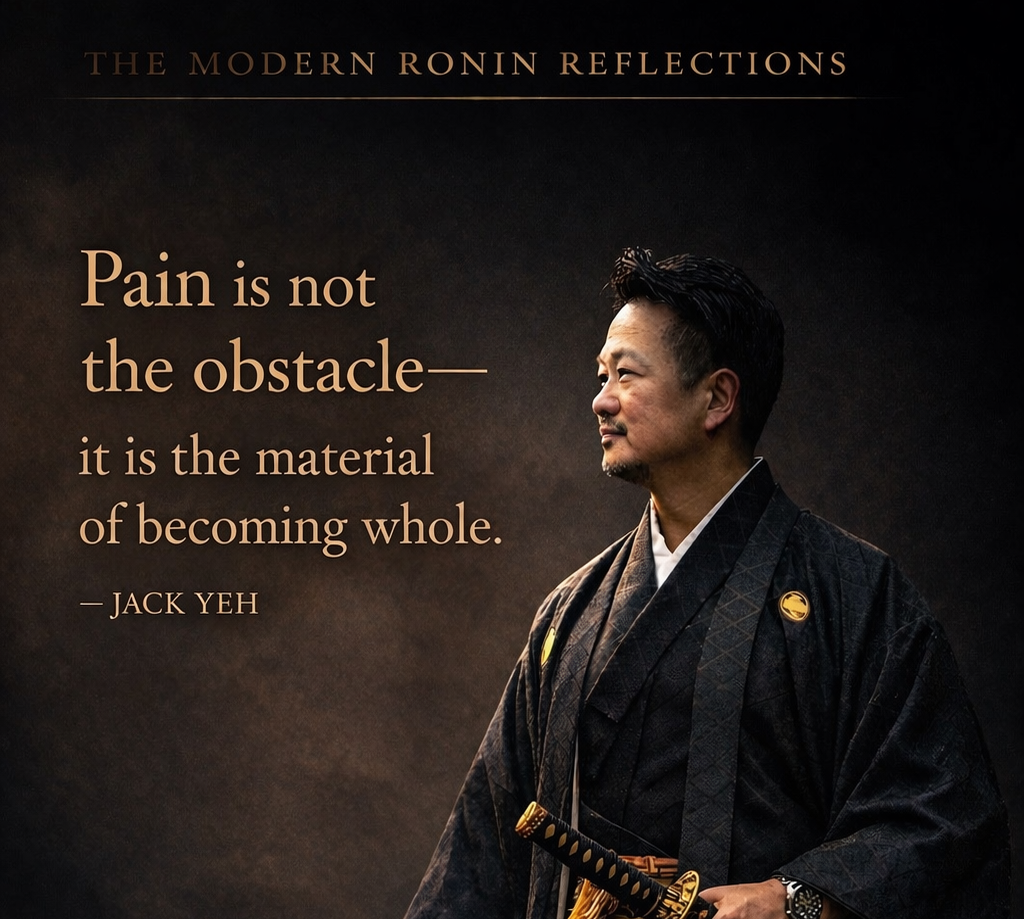
In this process, pain is not an error—
it is essential material.
Without pain,
there is no integration.
Without integration,
there is no wholeness.
The difference lies in whether you can move through it,
rather than be trapped by it.
Yes, many remain stuck in the cycle of healing their past.
But those who emerge from it
often become the outliers—the black horses.
This kind of pain is dual in nature:
it can be a curse,
or a rare opportunity for profound transformation.
If you are fighting through such pain,
or standing at the edge of change,
remember this—
this is not your ending.
This may be your beginning.
And along this path,
Jung’s ideas of shadow, individuation, and integration
can serve as powerful guides.
從傷到完整:自我整合之路
在克服了多年來由文化與成長背景所帶來的內在消耗之後,
我開始回頭看那些曾經的痛苦。
我發現,那並不只是痛苦。
它其實是一種可以被轉化的能量。
多數人把成長帶來的創傷視為不幸,甚至是一種詛咒。
但它同時也有另一面——
它可以成為一股推動個人蛻變的強大力量。
正如卡爾・榮格所指出的,
人生的目的並不是避免痛苦,
而是透過整合自我,成為一個完整的人。
在這樣的過程中,痛苦不是錯誤,
而是必要的材料。
沒有痛苦,
就沒有整合;
沒有整合,
就沒有真正的完整。
關鍵在於,你是否能穿越它,
是否能經歷這場試煉,而不是被它困住。
的確,很多人一生都停留在療癒童年的循環裡,無法走出來。
但也正因如此,
能夠走出來的人,往往成為那匹黑馬。
這種痛苦,本質上是雙面的:
它既可能是詛咒,
也可能是一次極其稀有的轉化契機。
如果你正在與這樣的痛苦對抗,
或正處於蛻變的過程中,
我想告訴你:
這不是終點。
這可能是你真正開始的地方。
而在這條路上,
卡爾・榮格關於「陰影」、「個體化」與「自我整合」的思想,
將會是極其重要的指引。