The Limits of Grand Narratives

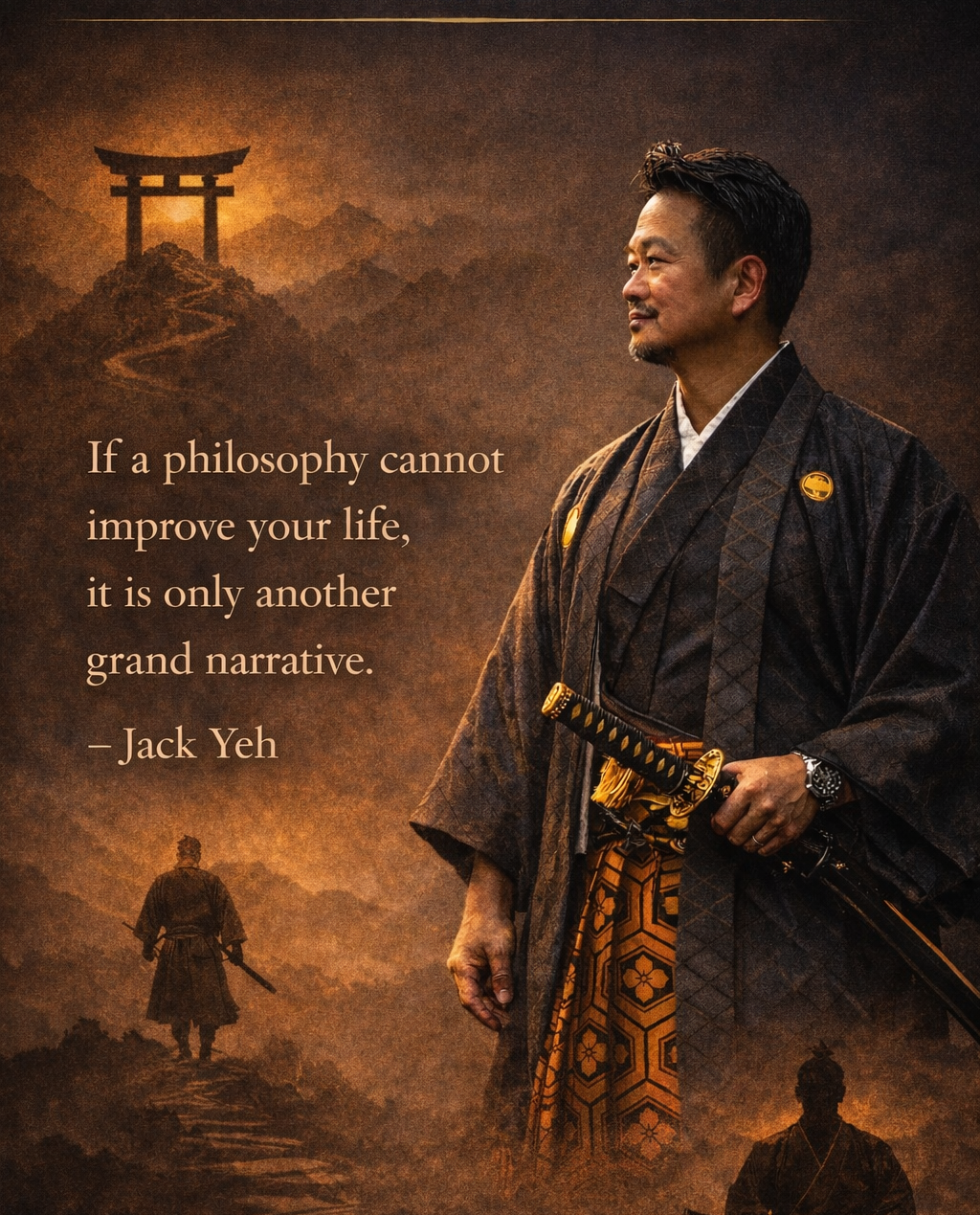
Many philosophical discussions today are filled with grand narratives.
They speak endlessly about nations, civilizations, ideologies, and humanity.
But very often, these conversations become empty.
If a person cannot even manage his own life—if he is constantly troubled, anxious, or lost—then speaking about saving the world or defending great ideals becomes meaningless.
Philosophy should first help a person live better.
If it cannot improve one’s own life, it is probably just another form of empty talk.
History also shows that the people who eventually influence the world rarely begin with some grand plan to change it.
Most of them simply focus on doing what seems most appropriate at each moment of their lives.
Their later influence is often the result of circumstances, timing, and opportunity—what in Buddhist thought might be called conditions and causes.
Life cannot be fully planned in advance.
As Steve Jobs once said, you can only connect the dots looking backward.
For this reason, I believe that the wisest approach is simple:
in each moment, do the thing that is most appropriate and beneficial in that moment.
Not what some distant future demands.
Not what some grand narrative expects.
Just what is right, here and now.