It’s All About Energy

When we observe the current development of AI,
the real bottleneck is not chips.
It is energy.
Training modern AI systems requires enormous amounts of power.
AI can dramatically increase economic productivity,
but that productivity ultimately depends on energy.
In the long run, it’s all about energy.
From the perspective of civilization,
humanity is currently around 0.7 on the Kardashev scale.
To become a Type I civilization,
we must learn to harness energy much more efficiently—
especially the energy of our star, the Sun.
More energy means more productivity.
More productivity means more progress.
But interestingly, the same principle also applies
to individual human beings.
When a person is not aligned internally,
their energy is constantly wasted.
They chase trends.
They chase attention.
They suffer from FOMO — fear of missing out.
Their energy is scattered.
But when a person becomes internally aligned,
when they know what they truly care about,
they can enter a state of flow.
And flow is simply efficient energy usage.
Just like economies grow through compounding,
individual value creation also follows the same principle.
Compounding is exponential growth.
It is the most powerful force in economics.
And it begins with efficient energy allocation.
When an individual aligns their inner energy
and focuses deeply on meaningful work,
their efforts begin to compound.
Value is created.
That value can then be exchanged
for another form of energy—
money.
Money, in essence, is simply stored energy in economic form.
Even AI itself follows this principle.
Training neural networks converts vast amounts of energy
into weights inside the network.
Those weights appear to be information.
But in reality,
they are a structured form of energy.
Human learning works in the same way.
When we study, think, and iterate,
we convert biological energy
into neural structures inside our brains.
Energy becomes knowledge.
Knowledge becomes capability.
So whether we look at it from the scale of civilization,
economics, AI, or individual growth,
the underlying principle remains the same.
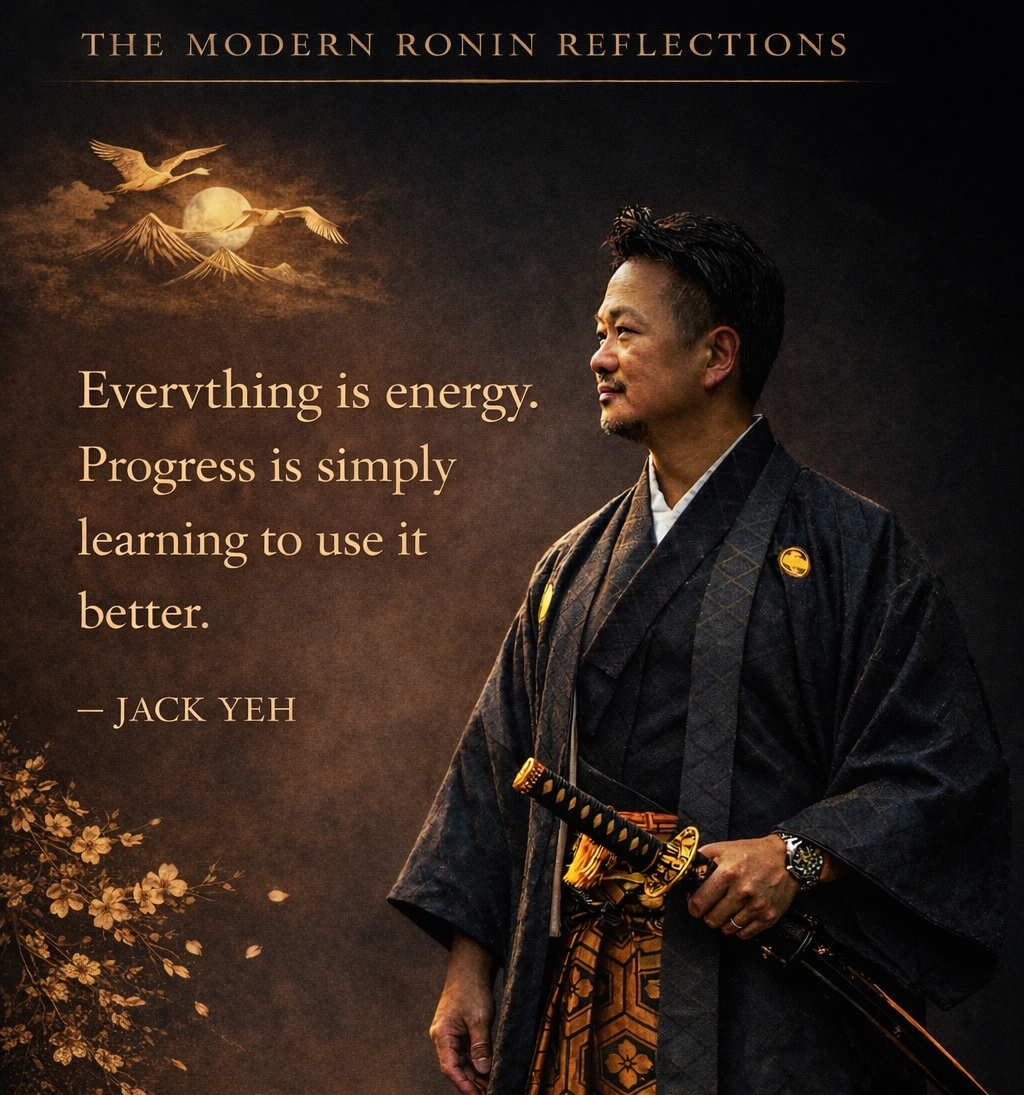
Everything is about energy.
當我們觀察目前 AI 的發展時,
真正的瓶頸其實不是晶片。
而是能量。
訓練現代 AI 系統需要極其龐大的電力。
AI 可以大幅提升經濟的生產力,
但這種生產力最終仍然取決於能量。
從長遠來看,
一切其實都是能量的問題。
從文明的角度來看,
人類目前大約處於 卡爾達肖夫文明等級 0.7 左右。
如果人類要成為 一級文明(Type I Civilization),
我們就必須學會更有效率地利用能量——
尤其是我們恆星 太陽 的能量。
更多的能量意味著更高的生產力,
更高的生產力意味著更大的文明進步。
但有趣的是,
同樣的原理其實也適用於個人。
當一個人沒有與自己的內在對齊時,
他的能量會不斷被浪費。
他追逐潮流,
追逐關注,
陷入 FOMO(害怕錯過) 的焦慮之中。
他的能量是分散的。
但當一個人與自己的內在對齊,
真正知道自己熱愛什麼,
他就可以進入一種 心流(Flow) 的狀態。
而所謂的心流,
其實就是一種高效率的能量使用方式。
就像經濟體的成長依靠 複利(compounding),
個人價值的創造其實也是同樣的原理。
複利是一種指數型的成長。
它是經濟學中最強大的力量之一。
而這一切的起點,
其實就是 能量的有效配置。
當一個人能夠將自己的能量與內在對齊,
並專注在真正重要的事情上,
他的努力就會開始產生複利效應。
價值就會被創造出來。
而這些價值
又可以在經濟體中交換成另一種形式的能量——
金錢。
從本質上來看,
金錢其實就是經濟體中的能量儲存形式。
甚至 AI 本身也遵循同樣的原理。
訓練神經網路時,
其實是把大量的能量
轉換成網路中的 權重(weights)。
這些權重看起來像是資訊。
但從更深的角度來看,
它們其實是一種被結構化的能量。
人類的學習也是一樣。
當我們學習、思考、反覆迭代時,
其實是在把我們的生物能量
轉換成大腦神經網路中的結構。
能量變成知識,
知識變成能力。
所以無論是從
文明、經濟、AI,
還是個人成長的角度來看,
背後其實都遵循同一個原理。
一切,都是能量。