After the Falling Sakura: Bushido, Tragic Beauty, and the Transformation of Postwar Japan
I have always felt that Japanese culture carries a unique kind of beauty —
a beauty that is both elegant and tragic.
It is a beauty born from impermanence.
Sakura blossoms are breathtaking not because they last forever,
but precisely because they are destined to fall.
The spirit of Bushido carries a similar philosophy.
White garments, falling cherry blossoms, seppuku, honor —
all reflect an aesthetic in which one’s beliefs and one’s life become inseparable.
For the samurai,
certain values were considered more important than life itself.
When honor was stained,
some chose to sacrifice their own lives in devotion to those ideals.
That is why Yukio Mishima remains such a complex and fascinating figure.
People admire him, yet also struggle to fully accept him.
Because he did not merely speak about Bushido.
He pushed his own life into his convictions.
In some sense,
his entire life became a work of art.
And I believe what truly moves people
is not death itself.
It is this:
A person willing to live to the absolute extreme
for something they genuinely believe in.
That is why people respect those
whose words and actions remain aligned until the very end.
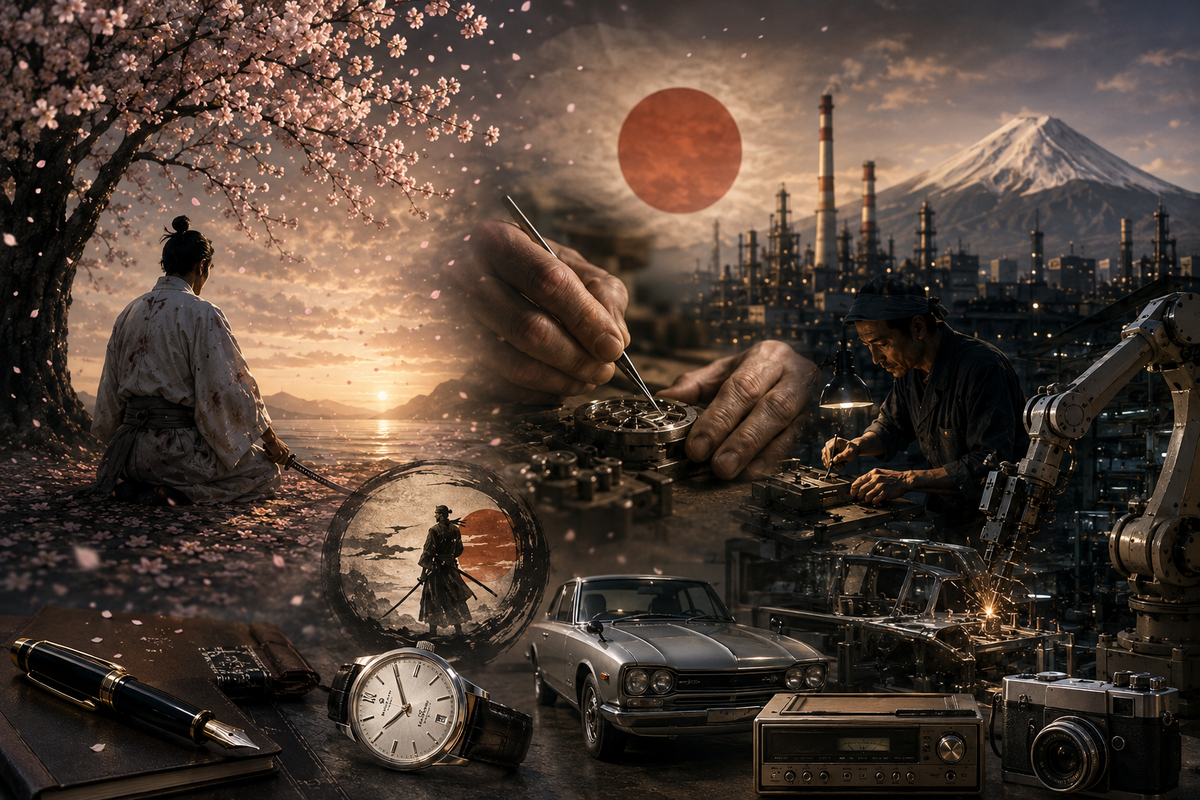
But I believe something equally fascinating happened to Japan after World War II.
Japan lost its military power after the war,
yet the spirit and energy of Bushido did not disappear.
It transformed.
It became:
- devotion to craftsmanship
- obsession with detail
- respect for quality
- pursuit of precision and technical perfection
As a result:
- automobiles
- electronics
- watches
- fountain pens
- industrial design
- artisan culture
became the new battlefield.
The spirit once carried by samurai
was redirected into products, engineering, and craftsmanship.
The battlefield changed,
but the duel remained.
Only now,
the sword had become technology and craftsmanship.
To me,
this transformation is both profound and deeply rational.
Because true Bushido was never merely about violence.
It was about:
the pursuit of conviction, integrity, and perfection.
— Jack Yeh
The Modern Ronin Reflections
櫻花落盡之後:武士道、極致之美,與戰後日本的精神轉化
我一直認為,日本文化裡有一種非常特殊、甚至帶著悲壯感的美。
那種美,來自於「短暫」。
櫻花之所以震撼人心,
不是因為它永遠盛開,
而是因為它終究會凋零。
日本武士道精神裡,也有類似的東西。
白衣、櫻花、切腹、榮譽。
那是一種將信念與生命綁在一起的極致美學。
對武士而言,
有些東西比生命本身更重要。
當榮譽被玷污時,
他們甚至願意以生命殉道。
所以三島由紀夫這個人,
才會讓很多人既佩服,又感到複雜。
因為他不是單純「談論武士道」。
他是真的把自己的生命,
推進了自己的理念裡。
某種程度上,
他的人生本身就像一場作品。
而我認為,真正讓人震撼的,
並不是死亡本身。
而是:
一個人願意為了自己真正相信的東西,活到極致。
這件事。
所以人們會對那種:
「言行一致到最後一刻」
的人產生敬意。
但我認為,日本在二戰之後,
發生了一件更值得思考的事情。
戰後的日本失去了軍事力量,
但那股武士道的精神與能量並沒有消失。
它被轉化了。
轉化成:
- 對工藝的執著
- 對細節的偏執
- 對品質的尊重
- 對技術與精度的追求
於是:
- 汽車
- 電子產品
- 手錶
- 鋼筆
- 工業設計
- 職人文化
都成為了新的「戰場」。
日本人將原本屬於武士的意志,
投入到產品與技藝之中。
戰場改變了,
但決鬥仍然存在。
只是從刀劍,
變成了工藝與技術。
我認為,
這是一種非常深刻,也非常合理的精神轉化。
因為真正的武士道,
從來不只是暴力。
而是:
對信念、完整性與極致的追求。
— Jack Yeh
The Modern Ronin Reflections