Do Not Only Become a Good Person

Carl Jung once said:
“I would rather be whole than good.”
This sentence touches one of the deepest psychological struggles of modern people.
Society teaches us to be kind,
agreeable,
helpful,
and socially acceptable.
At the same time,
we are taught to suppress the parts of ourselves that seem inappropriate—
anger,
selfishness,
conflict,
rebellion,
wildness,
desire,
and aggression.
Over time,
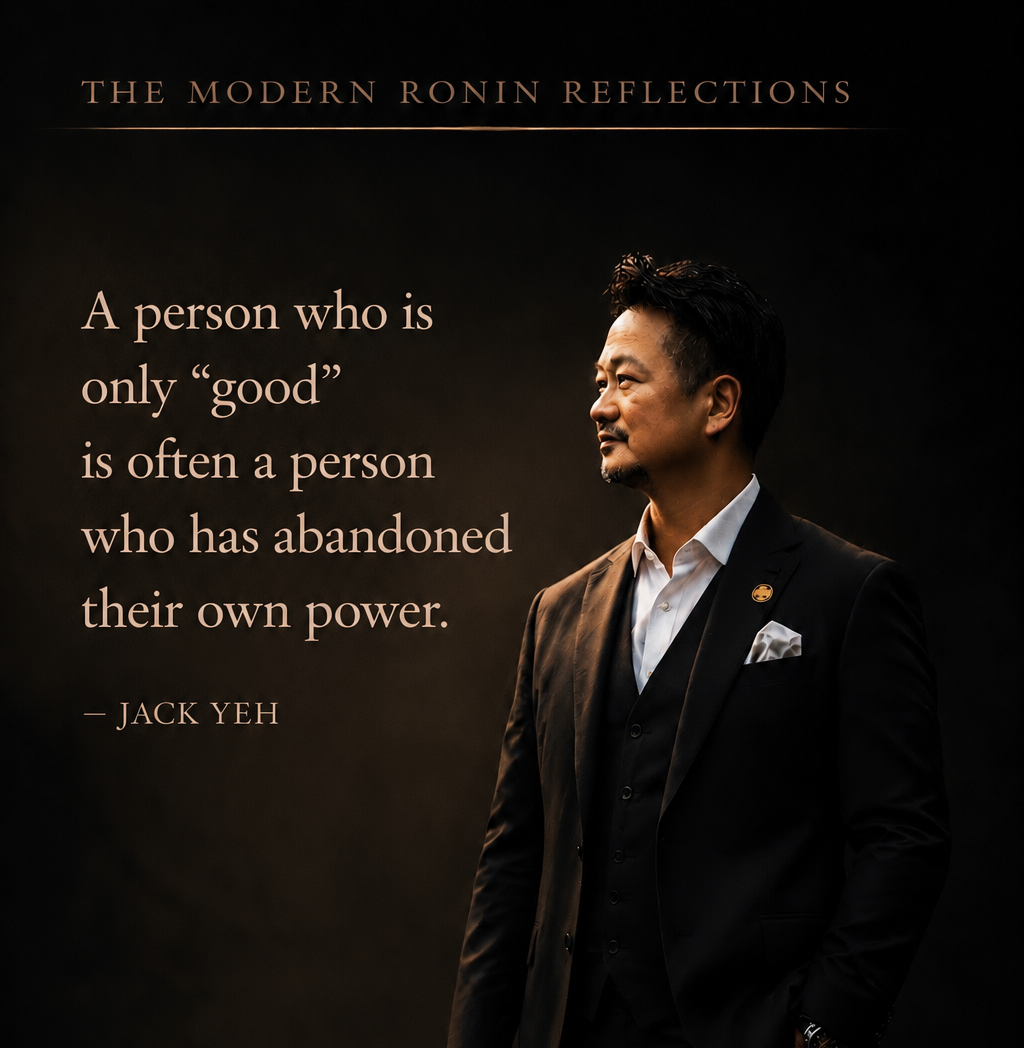
many people become chronic people-pleasers.
But such people often lose their strength,
their dignity,
and eventually themselves.
Jung believed that the shadow—the parts we suppress—is also an essential part of a complete personality.
The real problem is not the existence of darkness.
The real problem is whether we can consciously guide it.
At some point,
anyone who truly wants to live authentically
must become a certain kind of “villain” in the eyes of others.
Not to harm others—
but to stop betraying their own soul.
不要只做一個好人
卡爾・榮格曾說:
「與其做一個好人,我寧願做一個完整的人。」
這句話其實切中了現代人很深的一種精神困境。
這個社會從小教育我們:
要善良、
要配合、
要樂於助人、
要符合社會規範。
但同時,
我們也被要求壓抑內心那些“不夠正確”的部分——
憤怒、
自私、
衝突、
反擊、
野性、
慾望、
攻擊性。
久而久之,
很多人變成了永遠迎合別人的老好人。
但這樣的人,
往往活得沒有力量,
沒有尊嚴,
甚至失去了自己。
然而,
榮格認為,
那些被壓抑的陰影,
其實也是人格完整的一部分。
真正的問題,
從來不是黑暗的存在。
而是我們是否有能力,
有意識地去引導它。
某種程度上,
一個人若想真正活出自己,
就不可能永遠符合所有人的期待。
我們都必須在某個時刻,
學會成為某種程度上的「反派角色」。
不是為了傷害別人,
而是為了不再背叛自己的靈魂。