The Essence of Learning
I’ve come to realize that many creators, artists, and thinkers begin to “converge” as they reach their forties.
Not toward conformity — but toward clarity.
When I was young, studying at Taipei Institute of Technology, I never fully fit into the traditional education system.
I disliked rote learning and standardized paths.
While others focused on exams, I spent most of my time in libraries reading philosophy and psychology.
Academically, my fundamentals were weak at first.
But through self-exploration and independent study, I gradually rebuilt everything from the ground up — control theory, electronics, engineering mathematics, motor control.
That journey taught me something more important than knowledge itself:
Learning is not obedience.
Learning is understanding essence.
This is why I deeply resonate with Miyamoto Musashi’s philosophy in The Book of Five Rings:
- Do not depend entirely on teachers.
- Do not become trapped by schools or styles.
- Strategy is not technique — it is understanding the nature of reality.
From my twenties to thirties, I immersed myself in self-study.
From my thirties to forties, industry experience refined and tested that knowledge in the real world.
Over time, those experiences converged into my books, my engineering philosophy, and my work.
By my early forties, I had published multiple technical books and my English Springer title on AC motor control.
And now, at forty-four, I finally feel ready to return to where everything began:
Philosophy.
Self-exploration.
Inner alignment.
That is why I wrote:
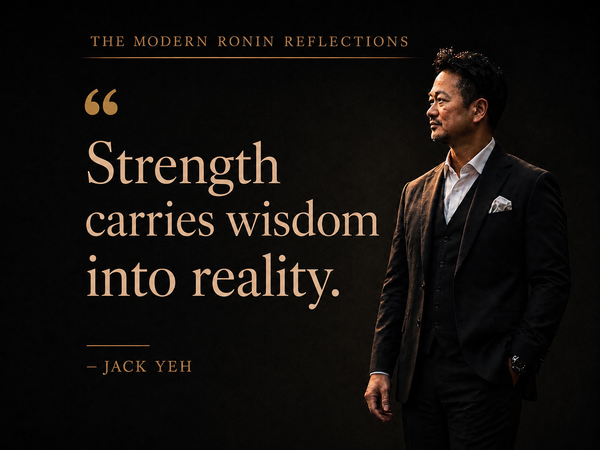
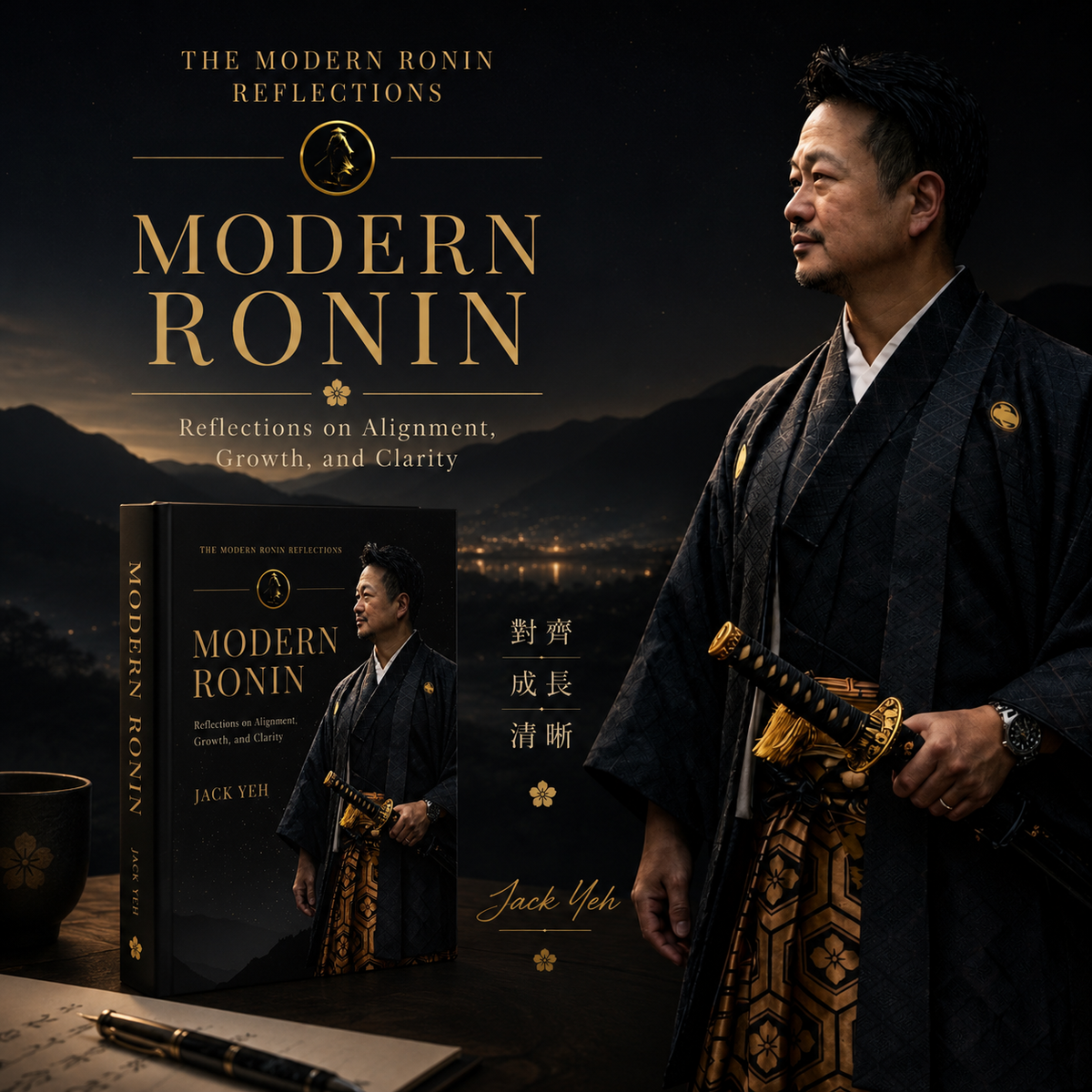
The Modern Ronin Reflections — Reflections on Alignment, Growth, and Clarity
This book is not merely philosophy.
It is the convergence of twenty years of practice, solitude, engineering, reflection, psychology, Stoicism, meditation, and lived experience.
Looking back, the entire process was never just about mastering technology.
It was a journey of becoming whole.
And I’m grateful that I had the courage to walk that path — often alone — all the way to this point.
《學習的本質》
我一直很喜歡宮本武藏在《五輪書》裡的一些思想。
其中有幾句話,
我非常有共鳴:
「學習不應依附於老師,必須自己判斷。」
以及:
「不要被流派困住。」
因為真正的兵法,
從來不只是招式。
而是對世界本質的理解。
回頭看自己的人生,
我發現我其實也是一路這樣走過來的。
五專時期,
我其實並不認同填鴨式教育。
所以很多時候,
別人上課、考試,
我卻經常泡在圖書館裡,
閱讀哲學、心理學與各種思想相關的書。
那時候的我,
甚至還不知道未來會走到哪裡。
但我知道,
我想理解的東西,
不只是考試。
二十歲到三十歲之間,
我開始大量自學電機控制、自動控制、電子學與工程數學。
而這一段長時間的自我摸索,
讓我慢慢掌握了一件事:
真正重要的,
從來不只是知識本身。
而是:
學習的方法,
以及理解事物本質的能力。
三十歲之後進入工業界,
我依然持續大量購買國外原文書,
持續研究與學習控制理論、電機控制與相關技術。
而工作的過程,
也讓我真正把理論與現實世界連結起來。
到了四十歲左右,
我開始慢慢收斂。
過去那些看似分散的人生經驗:
哲學、
心理學、
工程、
控制理論、
產業實戰、
孤獨、
探索、
挫折、
成長,
開始慢慢匯流成同一條河流。
43歲時,
我出版了三本中文技術書,
以及一本 Springer 的英文著作。
那像是我在電機控制領域,
二十多年學習與實踐的一次總結。
而到了44歲,
我又完成了自己的哲學與心理相關著作:
《The Modern Ronin Reflections: Reflections on Alignment, Growth, and Clarity》
這本書,
某種程度上,
其實是我二十多年來,
對於自我探索、
內在整合、
生活哲學、
孤獨、
成長與人生理解的一次收斂。
回頭看,
整個學習過程,
其實更像是一段:
自我探索的旅程。
而我很開心的是:
一路走來,
我始終有勇氣,
孤獨地走下去。
— Jack Yeh
The Modern Ronin Reflections