The Power of Perspective

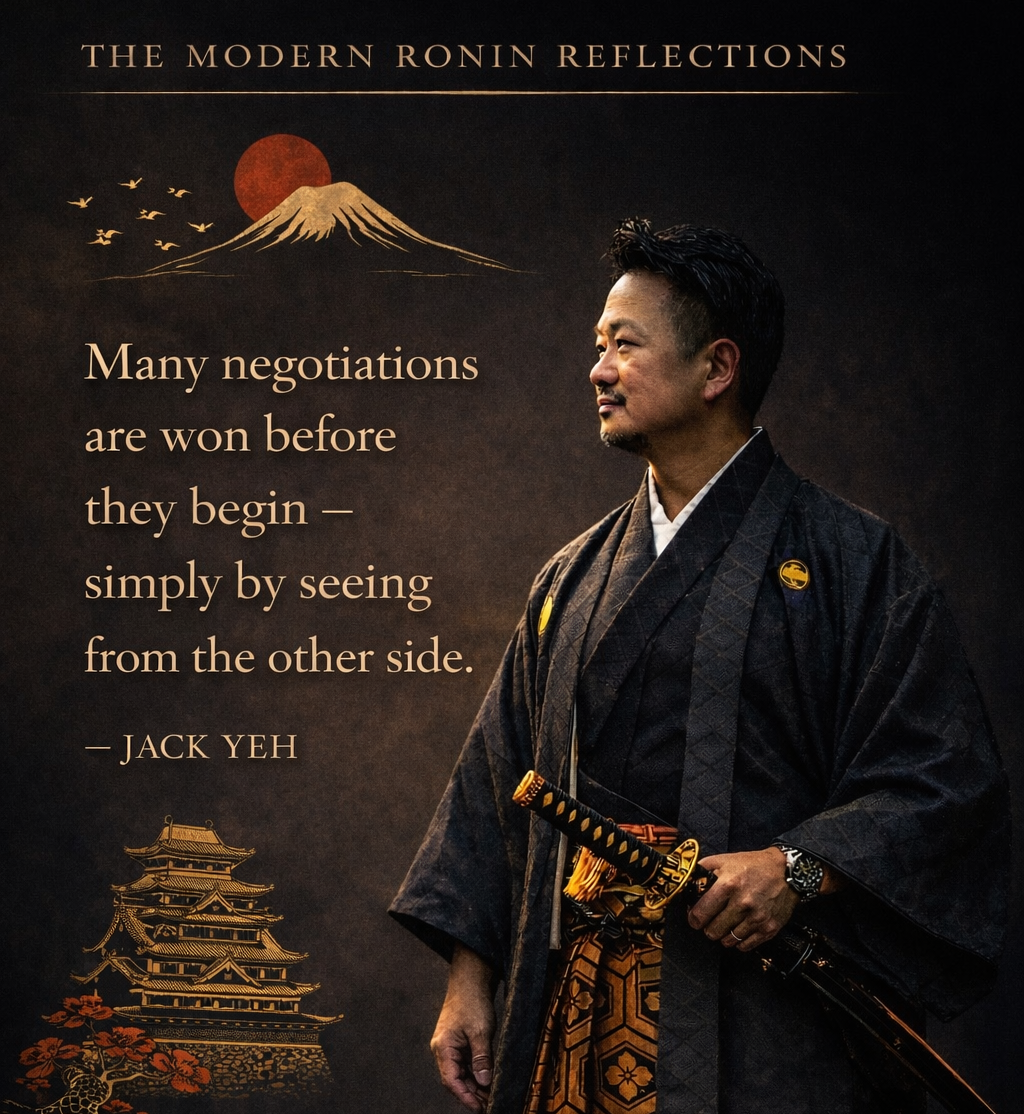
Many people believe negotiation is complicated.
But in reality, most negotiations are not difficult.
The key is simple:
learn to see from the other side.
When you stand in the position of the other party —
whether it is a publisher, a customer, or a business partner —
their decisions suddenly become understandable.
A publisher worries about risk.
A customer cares about value.
A company cares about sustainability.
Once you see the world through their lens,
the logic of the negotiation becomes clear.
This idea is not new.
More than two thousand years ago,
the Chinese strategist Sun Tzu wrote in The Art of War:
“Know yourself and know your enemy,
and you will not be defeated in a hundred battles.”
Knowing yourself is the first step.
But knowing the other side is equally important.
And the best way to understand the other side
is to think from their perspective.
In many ways, negotiation is not about clever tactics.
It is about perspective.
When you can simulate the thinking of the other side,
you can often predict their concerns,
their limits,
and even their next move.
What many people call strategy
is often nothing more than
the ability to see from another perspective.
很多人認為談判是一件很複雜的事情。
但事實上,大多數談判並沒有那麼困難。
關鍵其實很簡單:
學會站在對方的角度看事情。
當你站在對方的位置思考——
無論是出版社、客戶,還是合作夥伴——
他們的決策邏輯就會突然變得清楚。
出版社關心的是風險。
客戶關心的是價值。
公司關心的是長期可持續性。
當你開始用對方的視角看世界時,
談判的邏輯就會變得非常清楚。
其實這個道理並不新。
兩千多年前,
中國兵法家 孫子 在《孫子兵法》中就寫道:
知己知彼,百戰不殆。
了解自己,是第一步。
但同樣重要的,是了解對方。
而理解對方最好的方式,
就是 換位思考。
從某種意義上來說,
談判並不是靠技巧取勝。
真正重要的,是視角。
當你能夠模擬對方的思考方式時,
你往往就能預判他們的顧慮、
他們的底線,
甚至他們的下一步行動。
很多人所謂的「策略」,
其實不過是
能夠從不同視角看事情的能力而已。