The Wisdom of Non-Interference

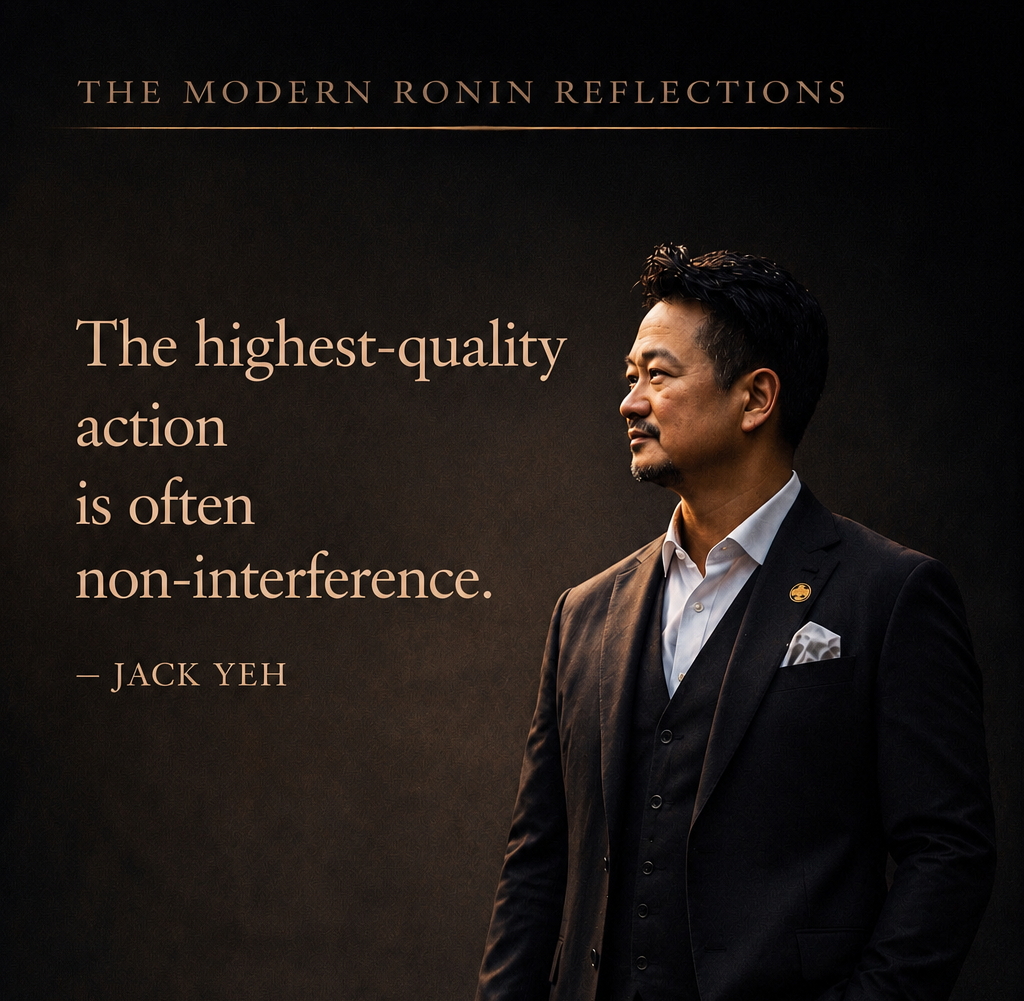
The older I get,
the more I realize that sometimes,
the highest-quality action
is no action at all.
Modern society constantly teaches us to move,
to act,
to prove ourselves.
Some even say:
“Don’t walk. Run.”
But from my observation,
people often spend their lives making poor decisions,
then exhausting themselves trying to repair the chaos they created.
Sometimes,
true wisdom is not intervention —
but non-interference.
When you plant a seed in the soil,
you do not keep digging it up every day to check its progress.
You give it time to root.
Because real growth
requires time,
space,
and stability.
Yet modern culture fears stillness.
It treats inaction as weakness.
So many people begin acting
simply for the sake of appearing useful.
They interfere,
not because intervention is necessary,
but because silence makes them uncomfortable.
And in doing so,
they disrupt the very order that was trying to emerge naturally.
True growth —
whether in a person,
an organization,
or a society —
does not come from constant interference.
It comes from understanding
when to stop interfering.
Because sometimes,
the highest-quality action
is simply
not destroying what is already trying to grow.
不干預的智慧
我越來越覺得,
有時候,
什麼都不做的行動,
反而是最高品質的行動。
這個社會總是不斷教導我們:
要行動、要積極、要證明自己。
甚至有人說:
「不要用走的,要用跑的。」
但根據我的觀察,
人其實經常在做錯誤的決定,
然後又花大量時間補救自己造成的混亂。
很多時候,
真正有智慧的行動,
反而是不干擾。
就像種子埋進土裡之後,
你不會每天把它挖出來確認它有沒有成長。
你會給它時間扎根。
因為真正的成長,
需要時間、空間與穩定。
然而,
現代社會卻對「不作為」充滿焦慮。
彷彿只要坐在那個位置上,
沒有持續做些什麼,
就是失職。
於是很多人開始:
為了做事而做事,
為了證明自己而行動。
但這種焦慮式的干預,
往往破壞了系統原本自然的秩序。
真正能讓個人、組織、
甚至社會長期成長的,
不是不斷干擾,
而是理解什麼時候應該停止干擾。
因為:
有時候,
最高品質的行動,
就是不去破壞本來正在形成的秩序。